Contact Us

Mobile No : 9940157127,9841248649


Email Id : info@pfrcivf.com

Friday, 10 July 2015

Diabetology

40% of our population are diabetic.
Among pregnant patients women over 35 have a higher risk of diabetes.
Patients undergoing IVF (Test Tube Baby) are at higher risk.
If undetected, diabetes can result in abnormal babies and miscarriages.
Ideal is to control it before planning pregnancy.
During pregnancy if not controlled can lead to preterm delivery, big babies, stillbirths and death immediately after delivery.
Pre Pregnancy counseling, dietary advice, maintaining normal blood glucose levels with insulin, checking on the function of the kidneys is very important to prevent complications.
7-128236_630x200
During delivery maintaining levels is important to prevent problems to mother and baby. After birth babies can have low blood sugar. To maintain sugar levels observation in the neonatal intensive care unit is a must.
In conclusion, a multidisciplinary approach by the obstetrician, diabetologist and neonatal care specialist is ideal.

Tuesday, 7 July 2015

ONCOLOGY


Oncology is the branch of medicine that studies tumors (cancer). The oncologist often coordinates the multidisciplinary care of cancer patients, which may involve physiotherapy, counseling, clinical genetics, to name but a few. An oncologist often has to liaise with pathologists on the exact biological nature of the tumor that is being treated.


Oncology is concerned with:

• The diagnosis of cancer
• Therapy (e.g., surgery, chemotherapy, radiotherapy and other modalities)
• Follow-up of cancer patients after successful treatment
• Palliative care of patients with terminal malignancies
• Ethical questions surrounding cancer care
• Screening efforts:
o of populations, or
o of the relatives of patients (in types of cancer that are thought to have a hereditary basis, such as breast cancer).

There are several sub-specialties within oncology. Moreover, oncologists often develop an interest and expertise in the management of particular types of cancer.
Oncologists may be divided on the basis of the type of treatment provided or whether their role is primarily diagnostic.
  • Radiology: localize, stage and often perform image-guided biopsy in order to obtain the tissue for preliminary diagnosis.
  • Anatomical pathology: render the final diagnosis and prognosis of cancer, in order to guide treatment by oncologists.
  • Radiation oncology: treatment primarily with radiation, a process called radiotherapy.
  • Surgical oncology: surgeons who specialize in tumor removal.
  • Medical oncology: treatment primarily with drugs, that is, pharmacotherapy, which includes chemotherapy, hormonal therapy, and targeted therapy.
  • Gynecologic oncology: focuses on cancers of the female reproductive system.
  • Pediatric oncology: concerned with the treatment of cancer in children

Thursday, 2 July 2015

Intra-cytoplasmic sperm injection ( ICSI )

Intra-cytoplasmic sperm injection, commonly referred to as ICSI, is a well-established microinjection technique, which has resulted in additional options for patients in the treatment of their infertility. ICSI involves the insertion of a single selected sperm directly into the cytoplasm of a mature egg, bypassing all the preliminary steps of sperm binding.  
This procedure overcomes many barriers to fertilisation which can include failed fertilisation from repeated use of conventional IVF, severe male factor infertility, very low sperm counts and/or motility, high number of morphologically abnormal sperm, utilisation of surgically retrieved sperm, use of frozen sperm when limited in number and quality.
The first human pregnancy with ICSI was reported in 1992 and since this time thousands of babies have been born as a result of the ICSI procedure, providing many couples with hope previously not available.
ICSI
ICSI enables fertilisation to happen when there are very few sperm available.
Your clinic may recommend ICSI if:
  • you have a very low sperm count
  • other problems with the sperm have been identified, such as poor morphology (abnormal shape) or poor motility (not moving normally)
  • during previous attempts at IVF there was failure of fertilisation or an unexpectedly low fertilisation rate
  • you need sperm to be collected surgically from the testicles or epididymis (a narrow tube inside the scrotum, where sperm are stored and matured); for example because you have had a vasectomy, you do not ejaculate sperm, or because you have extremely low sperm production
  • you are using frozen sperm in your treatment which is not of optimum quality
  • you are using embryo testing.
ICSI (1)

Monday, 29 June 2015

Intrauterine insemination (IUI)

The highly motile and morphologically normal sperm are harvested by density gradient separation technique from the semen which is usually a mixture of pus cells and abnormal sperm. The separated good sperm is enriched with special medium using highly sterile technique. We also prepare sperm sample for other clinics so that they can perform IUI independently at their centre and improve the success rate of intrauterine insemination. Woman with ovulatory dysfunction, treated endometriosis with patent tubes, luteal phase defects, cervical factor incompatibility, polycystic ovarian disease , can try IUI first before trying more advanced techniques of Assisted Reproduction. Men with slightly compromised semen parameters can also benefit from IUI. A cozy room specially designed for semen collection is available for the male partner. The room provides absolute privacy. The cumulative pregnancy rates after 6 cycle of IUI is about 70 - 80%.


Intrauterine insemination (IUI) - chance of success:

It is difficult to assess success rates for intrauterine insemination (IUI) because success depends upon the cause of infertility and whether fertility drugs are used to stimulate egg production.
Discuss with your clinician whether fertility drugs are suitable for you. Usually, it would be reasonable to try three to six IUI treatments. Your clinician will advise what is best for you.

• 15.8% (237/1497) for women aged under 35
• 11.0% (154/1394) for women aged between 35-39
• 4.7% (23/492) for women aged between 40-42
• 1.2% (2/172) for women aged between 43-44
• ** (0/46) for women aged over 44

Figures given in brackets are (IUI cycles resulting in a live birth / IUI cycles started).
If IUI fails after several attempts, depending on your age, your doctor may suggest you try another treatment such as in vitro fertilisation (IVF).

Thursday, 25 June 2015

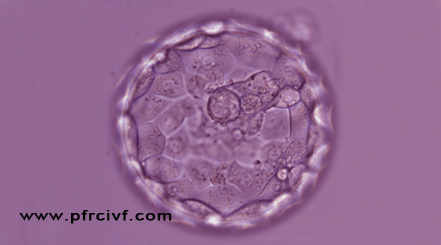
BLASTOCYST CULTURE

In the past most embryos produced with IVF were transferred on day three of development, known as cleavage stage. When an embryo reaches five days of development it is called a blastocyst. Currently, with advances in understanding of the needs of developing embryos, the ability to produce blastocysts in the laboratory has increased. This extended culture time allows nature to help select those embryos with the highest capacity to produce a pregnancy. Culturing and transferring blastocysts on day five of development allows the transfer of fewer embryos while still maintaining a high pregnancy rate. Normally only two blastocyst stage embryos are transferred, thus reducing the risk of multiple pregnancies higher than twins.
pinkblast
Why Blastocyst Transfer ?

Selection of embryos

We know that at least 50% (or higher in women over 40) of embryos are not viable, and many of these arrest their development before the blastocyst stage. A large proportion of these embryos have a chromosome or genetic defect and it is believed that those embryos that failed to develop to the blastocyst would not, in any event, have established a pregnancy. Where there are large numbers of good quality embryos available at the blastocyst stage these can be frozen. CARE Fertility has seen excellent post thaw survival and pregnancy rates with frozen blastocysts.

Embryos are transferred to the right place at the right time

Some researchers believe that the conditions in the womb may be more optimal for a blastocyst than a day 2/3 embryo as there are slightly differing conditions in the fallopian tube and the womb on day 2/3.

Higher pregnancy rate in women having Blastocyst Transfer

Data suggests that blastocyst transfer can increase the chances of a live birth but it needs to be remembered that each couple must be considered independently.

Confirmation of development to the blastocyst stage

Some specialists believe that for those patients who have recurrent failure of implantation, extended culture gives an opportunity to examine the embryo quality over a longer period. If the embryos arrest or become fragmented this may help to clarify a potential problem.

Specific situations where blastocyst transfer is applicable

Where single embryo transfer is specifically indicated (eg. previous history of multiple pregnancy, patient preference, uterine anomaly etc) blastocyst transfer may be a particularly useful option.
Blastocyst441245

Extended culture and Blastocys Transfer with Frozen Embryos

Some patients have large numbers of frozen embryos and it can difficult to know which have the best potential for pregnancy. An option in these cases is to thaw all embryos and culture through to the blastocyst stage to allow the best 1 or 2 embryos to be replaced based on development.
The main benefit of the blastocyst transfer approach is in the ability to discriminate between different embryos in terms of their quality and implantation potential. It is essential to understand that the extended culture process doesn't enhance an embryos quality per se, it is principally a method for choosing the 'front runner' or 'runners' from a group of embryos.
CARE doctors and embryologists will advise on whether blastocyst transfer is possible this will depend on the number and quality of embryos available on day 3.

Tuesday, 23 June 2015

Donor Oocyte Programme

Welcome to the donor egg programme, which has been functioning since 2002.  the donor oocyte (egg) programme is a boon for women who are unable to produce healthy oocytes or who have chromosomal abnormalities or who have had repeated IVF failures.  The selection criteria for donors abide by strict guidelines laid down by Human Fertilization and Embryology act and by the guidelines laid down by American Society of Reproductive medicine.  PFRC has a large donor bank with over 150 donors.

Egg Donation:
The programme is one of the largest in India and provides quality service at affordable cost.  Worldwide couples have benefited by this programme and are immensely happy with the professional service offered by the center.

Egg Donation and you:
Our egg donation program at Conceptual Options allows Intended parents to choose a donor with the physical and mental characteristics that match their own.  The eggs from this donor are then fertilized with the sperm provided by the partner or a donor and transferred into either a surrogate or the intended mother.


Selection criteria include for the Donor:

    Age less than 27
    Must have had children earlier
    Should undergo all medical tests for general health
    Normal hormone values and normal uterus and ovaries
    No history of genetic or medical problems.
   Donors are not allowed to donate no more than 6 times.  The donors are counseled regarding the procedure and the importance of daily visits to the clinic.  They are subjected to psychological assessment and we ensure that they stick to unit protocols to ensure smooth functioning of the programme.
 
For the children:

The children also undergo medical and psychological IQ assessment to ensure quality care.  A database of physical characteristic, medical screening and all assessments made is maintained and the donor is matched as per the requirement of the recipient. www.pfrcivf.com Consent forms are signed by the donor, her husband and the recipient couples to avoid legal problems.
We have a programme for oocyte donation for women with premature ovarian failure, surgical or induced menopause and those in the perimenopausal group.  Some women with repeated poor recruitment of follicles at the time of IVF, women with extensive endometriosis, severe pelvic adhesions and in accessible ovaries might also qualify for this programme.  A total of 506 babies have been delivered till date.  The success rate of the donor oocyte program is 65 – 69%.  Their babies are as normal as other babies born through IVF programs using own oocytes.

Egg Donation Program:

Clinical Pregnancy rate per Embryo Transfer                67%
Clinical Pregnancies                                                      55%

Donor Egg Cycle:

In this cycle you do not undergo ovarian stimulation. www.pfrcivf.com The eggs are taken from a donor who undergoes ovarian stimulation after down regulation as explained in the long protocol.  You will be asked to take T. Ovral G from a specific day and stop on a specific date.  Injection suprefact is started before Ovral G is stopped for down regulating your body hormones.  You have to come daily for the injections.  On Day 3 of the period you have to undergo an ultrasound to measure the Endometrial thickness, if it has been sufficiently suppressed, tab.  Progynova is started from D3 to stimulate Endometrial growth.  The Endometrial thickness is measured on frequent scans and when the lining is about 1 cm and eggs have been collected from the donor your husband is asked to give a semen sample (on the day of egg collection from the donor).  Fertilization is done.  You will be asked to stop suprefact injection and start inj.  Gestone 100 mg.  daily from that day.  You should call the unit the next day to find out about the day of embryo transfer.
Regarding the donor, we select a healthy person in the age group of 20-25.  We screen them for major infections like VDRL, Hbs Ag & HIV.  Detailed family history, medical history & surgical history is enquired into.  We select people who already have healthy children so that we can rule out major familial diseases.  Confidentiality is maintained.  The 2-3% risk of congenital anomalies found in the general population is applicable here also.


Saturday, 20 June 2015

Semen collection

Semen collection

Semen collection refers to the process of obtaining semen from male humans or other animals with the use of various methods, for the purposes of artificial insemination, or medical study (usually in fertility clinics). Semen can be collected via masturbation (e. g., from male wolves,dogs and foxes), prostate massage, artificial vagina, penile vibratory stimulation (vibroejaculation) and electroejaculation.

Humans
Methods of semen collection from humans include:

Masturbation, directing the sample into a clean cup.This is the most common way to collect a semen sample.
Sexual intercourse in a special type of condom known as a collection condom.Collection condoms are made from silicone or polyurethane, as latex is somewhat harmful to sperm. Many men prefer collection condoms to masturbation, and some religions prohibit masturbation entirely. Adherents of religions that prohibit contraception may use collection condoms with holes pricked in them.However, such samples are inferior to the ones collected by masturbation in clean cup.
Coitus interruptus (withdrawal). With this technique, the man removes his penis from his partner near the end of intercourse and ejaculates into a wide-necked cup or bottle.http://www.pfrcivf.com

Surgical extraction, if for example a blockage in the vas deferens is suspected to impede fertility, semen can be taken directly from the epididymis. Such a collection is called per cutaneous epididymal sperm aspiration (PESA). Alternatively, the testicular tissue itself, instead of the sperm produced can be investigated. Then, the collecting method is called testicular sperm extraction (TESE). A Cochrane review found insufficient evidence to recommend any specific surgical sperm retrieval technique for men with azoospermia undergoing intracytoplasmic sperm injection (ICSI).
Penile vibratory stimulation (PVS) and electroejaculation are two other alternatives for men with anejaculation due to spinal cord injury.The penile vibratory stimulator is a plier-like device that is placed around the glans penis to stimulate it by vibration, and provides the first-line method for sperm retrieval in spinal cord injury patients with anejaculation.http://www.pfrcivf.com/andrology-services/semen-collection.html

The best specimen is produced when a short period of 3–5 days of abstinence is observed. More prolonged period does not yield better results.